ServicesCommercial Roofing
Commercial Roofing in Richardson
We work on flat and low-slope roofs for offices, retail strips, churches and small warehouses. You get a clear read on what the roof needs, photos of every problem we find, and plain help understanding an insurance claim, without promises we can't keep.
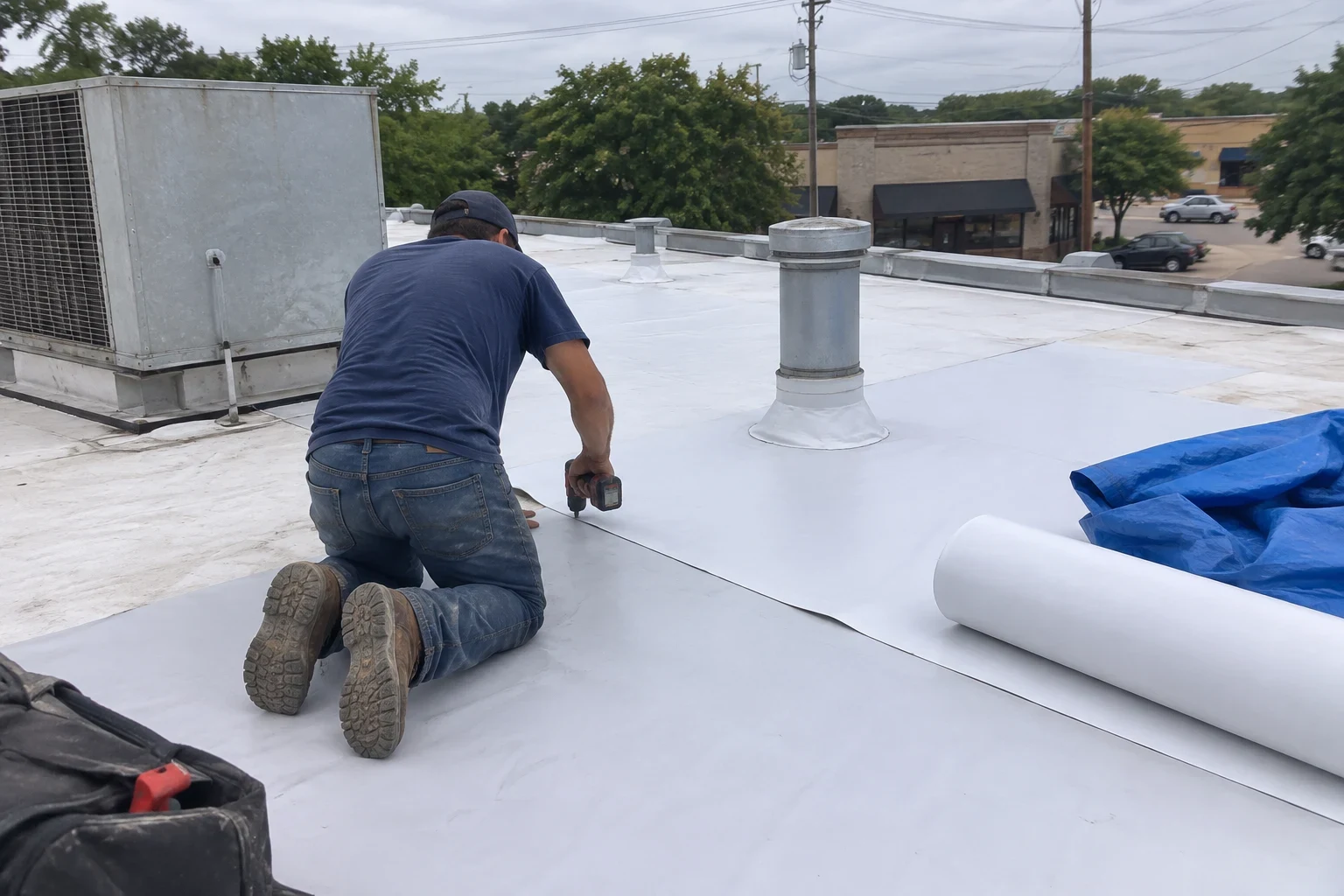
Roofing for the building your business depends on
A commercial roof fails differently than a house roof. Water sits instead of running off, seams open up slowly, and a leak can travel across the deck before it shows up as a stained ceiling tile several feet away from the real problem. We bring 10 years of experience to reading those roofs and telling owners what is actually going on.
We are licensed and work on the systems most common on smaller commercial buildings: TPO and other single-ply membranes, modified bitumen, built-up gravel roofs and metal panel roofs. When hail comes through North Texas, we document the roof carefully so you have something solid to hand your insurer, and we explain how a claim usually moves without acting as your adjuster.
If you also need work on your own house, our residential roofing page covers that side. For build-outs and other work inside the building, see commercial contracting.
What the work covers
- Membrane and seam work
- Single-ply membranes like TPO depend on heat-welded seams. We probe every seam we can reach, reweld or patch where they have pulled apart, and address sections where the sheet has turned brittle or shrunk away from the edges.
- Flashing at parapets and curbs
- Most commercial leaks start where the roof meets something else: parapet walls, HVAC curbs, pipe boots and skylights. We rebuild these details so they shed water instead of holding it.
- Drainage and ponding
- Water that stands for more than a couple of days after rain wears a membrane out early. We clear drains and scuppers, check the slope, and add tapered insulation or crickets where water keeps collecting.
- Coatings and new membranes
- A coating can add years to a roof that is still dry underneath. When it is not, we install a new membrane or metal system with insulation board and edge metal, and we pull the permit the city requires.
- Claim documentation
- After hail or high wind, we photograph impact marks, torn seams and dented rooftop equipment, noting where each one sits on the roof. You get the photos and a written summary to share with your insurer.
Signs your commercial roof needs attention
Stained ceiling tiles
A tan or brown blotch on a drop-ceiling panel tells you water is finding a way inside. The leak itself often sits some distance from the mark, so tracing it from the roof side is the reliable way to find it.
Water standing after rain
Puddles that linger two days after a storm usually point to a blocked drain, a sagging deck or a low spot in the insulation.
Blisters and wrinkles
Bubbles in modified bitumen or built-up roofing usually mean trapped moisture or a lost bond. Left alone, they split open in summer heat.
Seams lifting at the edges
If a finger slides under a membrane seam or the edge metal feels loose, wind can work its way underneath and peel back more of the roof.
Dents on rooftop units and metal
Hail marks on HVAC housings, vents or metal panels are a strong hint the membrane took hits too, even if it looks fine from the ground.
Cooling bills creeping up
Wet insulation loses much of its value. A slow leak can quietly make the building harder and costlier to keep cool.
What moves the price
A commercial roof is priced on what's really up there, so we don't give numbers before walking it. The free estimate splits the work into individual line items, letting you trace each part of the cost before you commit. These factors usually matter most.
Roof size and layout
Square footage matters, and so do parapets, multiple roof levels and odd angles, since each adds flashing and labor.
What sits beneath the membrane
Dry insulation on a sound deck keeps costs down. Wet insulation or a rusted metal deck has to be replaced, and you see photos and core samples before it ever shows up on the estimate.
The roof system you pick
Coatings, single-ply membranes, modified bitumen and metal panels vary in upfront price and lifespan. We explain the trade-offs plainly.
Rooftop units and getting materials up
Each HVAC unit, vent and skylight needs its own flashing. Without a roof hatch, or on a tight lot, a lift or crane may be needed to bring materials up.
Permits and timing
Larger jobs require a permit and inspection. Doing the work after hours to keep your business open can also affect the price.
How a commercial roofing job runs
- 1
A phone call and a visit
You call, describe the building and any leaks you've noticed, and we pick a time to get up on the roof. The estimate costs you nothing.
- 2
Time on the roof
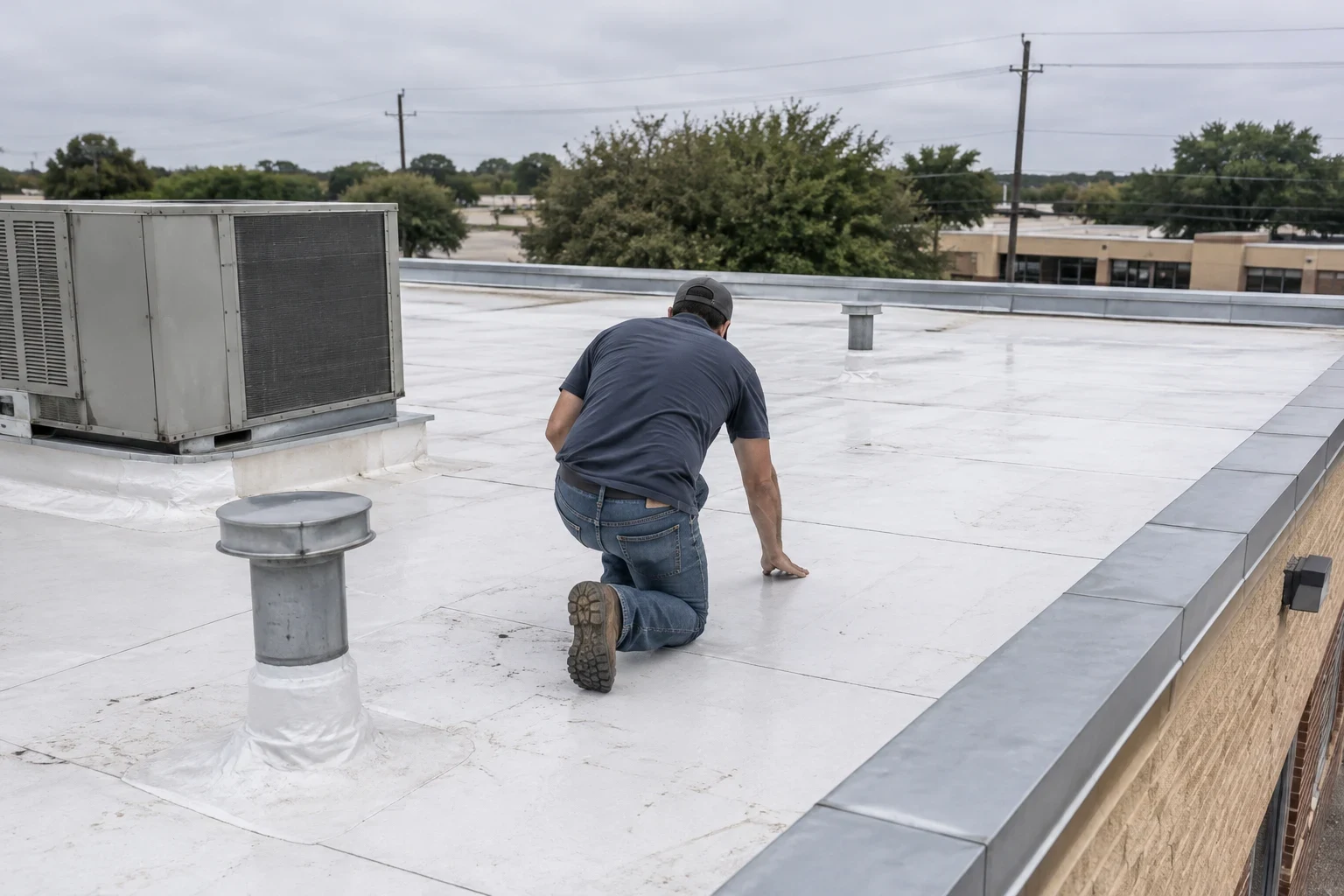
We look over the membrane, seams, flashing, drains and whatever part of the deck we can reach, photographing as we go. If we think the insulation is wet, we may take a small core sample and seal the spot before leaving.
- 3
A written estimate you can follow
You receive a line-item estimate with the photos attached. We give you a straight answer on whether focused work will last a good while or whether replacing the roof makes more sense. When hail or wind is part of the picture, we explain how a claim typically unfolds.
- 4
Work days planned around your business
We time deliveries, crane lifts and loud tear-off for the hours that disturb your tenants or customers least. Walkways stay open, and we collect debris and stray fasteners before we leave each day.
- 5
A final walk
Once the job is done, we walk the roof with you or send photos of the finished work. We also explain our workmanship warranty, which covers eligible projects, with coverage that varies by service.
Commercial roofing questions
Will my insurance pay for a hail-damaged commercial roof?
That decision belongs to your insurer and depends on your policy and deductible. What we can do is document the damage clearly, meet the adjuster on the roof if you would like, and explain the line items so you know what you are reading. We won't tell you a claim is a sure thing before the insurer has looked.
Can you work while my business stays open?
In most cases, yes. We plan the loud and messy parts for slower hours, keep entrances clear, and tell you ahead of time which days will be busiest on the roof.
Is a roof coating a good option for my building?
Sometimes. A coating can extend the life of a membrane that is still sound and dry underneath. It won't fix wet insulation or failing seams, and if your roof isn't a good candidate, we will tell you.
Do you work on metal commercial roofs?
Yes. We handle loose fasteners, failing sealant at panel laps, rust spots and flashing around penetrations, and we document hail dents for a claim when needed.
Which areas do you cover?
We work on commercial buildings in Richardson and nearby communities, including Plano, Garland, Addison and Carrollton. Give us a call and we can confirm your location.
Know what your roof needs before you decide
Give us a quick rundown of the building and any leaks or damage you have spotted. We will arrange a visit, photograph what we find and put together a free written estimate for you.